AF With Rapid Ventricular Response (AF RVR) on the ECG
Atrial fibrillation with rapid ventricular response is atrial fibrillation in which the AV node conducts enough impulses to produce a ventricular rate above 100 beats per minute, typically 110 to 180, while retaining the absent P waves and irregularly irregular rhythm of ordinary AF.
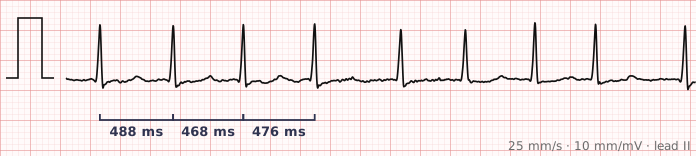
ECG criteria
| Feature | What you see in AF RVR |
|---|---|
| Rate | Over 100 bpm, most often 110–180. Above 200 raises the possibility of an accessory pathway. |
| Rhythm | Irregularly irregular — but the faster the rate, the harder that is to see by eye. |
| P wave | Absent, as in any atrial fibrillation. Fibrillatory waves may be hard to find at speed. |
| PR interval | Not measurable. |
| QRS | Narrow, under 120 ms. Wide and irregular at very high rates suggests pre-excited AF, which is managed completely differently. |
| ST-T | Rate-related ST depression is very common and usually resolves once the rate is controlled. |
How to spot it
- Confirm the rate is over 100 by counting, not estimating.
- Prove the rhythm is irregularly irregular. At 170 the beat-to-beat variation looks small, so use calipers or paper and mark three R waves rather than judging by eye.
- Confirm there are no P waves in II or V1.
- Measure the QRS. Narrow is ordinary AF with RVR; wide and irregular at a very high rate means you should think about an accessory pathway before reaching for the usual drugs.
- Note the ST depression but do not commit to ischaemia on the tachycardic tracing — reassess once the rate settles.
- Then ask what is driving the rate. Sepsis, bleeding, pain, pulmonary embolism, thyrotoxicosis and alcohol all push AF faster.
What it gets confused with
| Looks like | How to tell them apart |
|---|---|
| Atrial flutter with variable block | Organised sawtooth atrial activity at about 300. AF has none. |
| Supraventricular tachycardia | Regular, at a fixed rate. The distinction is regularity, and it becomes genuinely difficult above 170. |
| Sinus tachycardia | Regular with visible sinus P waves. |
| Pre-excited AF | Irregular, very fast, wide, with QRS width that varies beat to beat. AV nodal blockers are contraindicated. |
| Multifocal atrial tachycardia | Irregular but with P waves in at least three shapes. |
Traps
- Fast AF is the classic reason AF gets called SVT. As rate rises, absolute R-R variation shrinks and the rhythm starts to look regular. Measure the intervals rather than trusting the eye.
- Wide, irregular and very fast is pre-excited AF until proven otherwise. Adenosine, verapamil, diltiazem, beta blockers and digoxin all make it worse by pushing conduction down the accessory pathway.
- RVR is usually a response, not the primary problem. Slowing the rate without addressing sepsis, hypovolaemia or pulmonary embolism treats the number rather than the patient.
- Rate-related ST depression at 160 is common and is not by itself evidence of coronary disease.
- A sustained very high rate can cause a tachycardia-induced cardiomyopathy, so persistent RVR matters even when it is tolerated.
Why it happens
The fibrillating atria bombard the AV node at 400 to 600 impulses per minute. How many get through depends on the node's refractory period, which shortens under sympathetic drive and lengthens with vagal tone or rate-controlling drugs. Anything that raises catecholamines therefore lets more impulses through, and the ventricular rate climbs while the underlying atrial chaos is unchanged.
Why it matters
Rapid ventricular response is what turns atrial fibrillation from an incidental finding into a presenting complaint. The loss of atrial contribution to filling matters far more at speed, because diastole shortens, so patients become symptomatic or haemodynamically compromised. The rate is also a signal: a new fast AF often marks an acute illness elsewhere.
Questions
What ventricular rate counts as rapid ventricular response?
Above 100 beats per minute, though the term is generally reserved for rates well above that — typically 110 to 180. The underlying rhythm is ordinary atrial fibrillation; only the proportion of impulses conducted has changed.
Why does fast AF look regular?
The absolute variation between R-R intervals shrinks as the rate rises, so at 170 the irregularity can be almost invisible to the eye. Measuring three consecutive R-R intervals with calipers or paper reveals it.
When is a fast irregular rhythm dangerous?
When it is also wide, with QRS width varying beat to beat. That pattern suggests atrial fibrillation conducting down an accessory pathway, where AV nodal blocking drugs accelerate the ventricular rate and can precipitate ventricular fibrillation.
Should the rate always be treated?
Not in isolation. Rapid ventricular response is frequently driven by something else — sepsis, bleeding, pain, pulmonary embolism, thyrotoxicosis — and treating the cause often controls the rate. Persistent uncontrolled rates do need attention, since they can weaken the ventricle over time.
Reading about af with rapid ventricular response is not the same as calling it on a tracing you have never seen.
Practise on real cases in ECG Pro